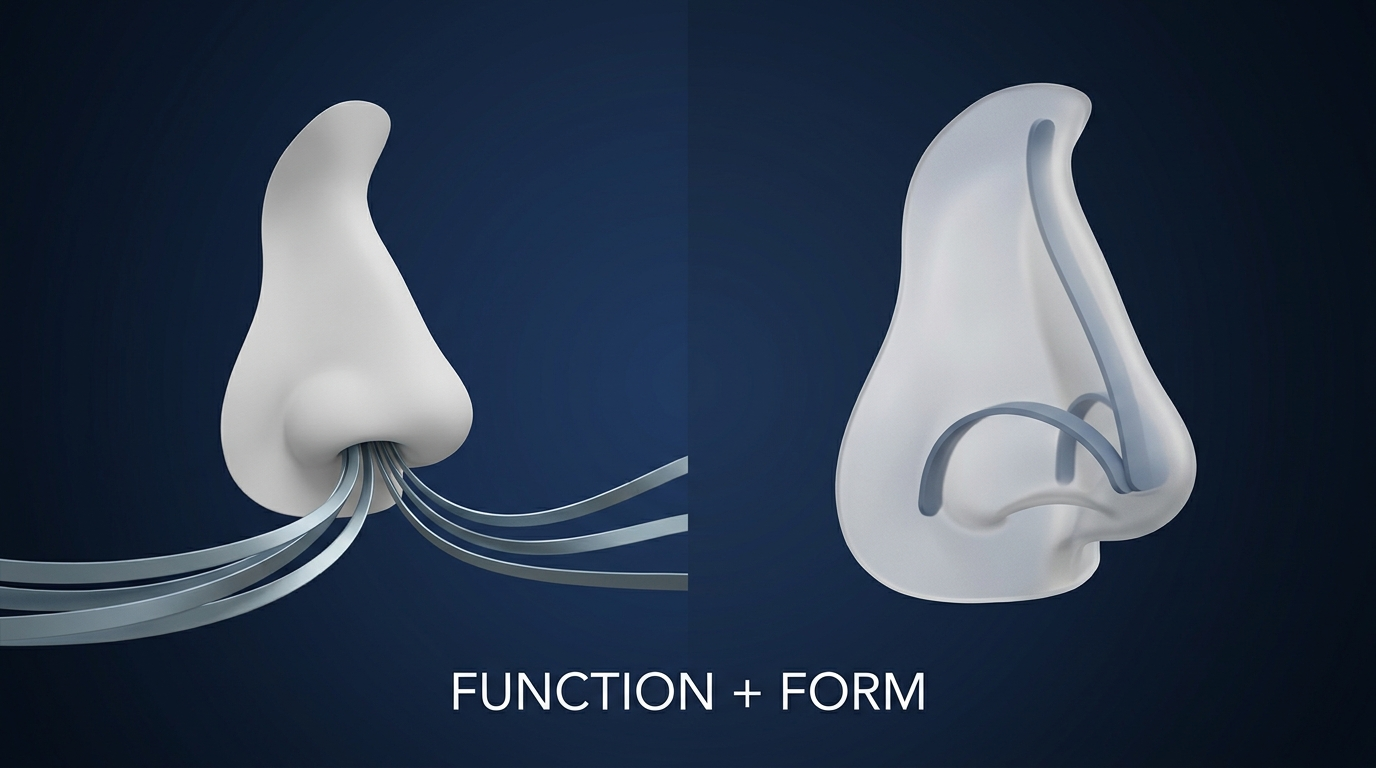

Functional Endoscopic Sinus Surgery (FESS): Benefits, Procedure, Recovery, and Risks
If you’ve dealt with months (or years) of stuffiness, facial pressure, recurring “sinus infections,” or a reduced sense of smell, you may have come across Functional Endoscopic Sinus Surgery (FESS) as a potential next step. This procedure is designed to improve sinus drainage and ventilation and may help selected patients who have not gotten lasting relief from appropriate medical therapy.
A helpful way to picture chronic sinus disease is to imagine your sinuses as a set of small rooms connected by narrow doorways. When the lining stays inflamed, those doorways can swell shut—so mucus can’t clear well, air can’t circulate normally, and symptoms keep cycling back.
Below is a patient-friendly guide to what FESS treats, how it works, what recovery can look like, and how newer tools (like image-guided sinus surgery, balloon sinuplasty, and biologic medications for chronic rhinosinusitis with nasal polyps [CRSwNP]) fit into today’s treatment planning.
What Is Functional Endoscopic Sinus Surgery (FESS)?
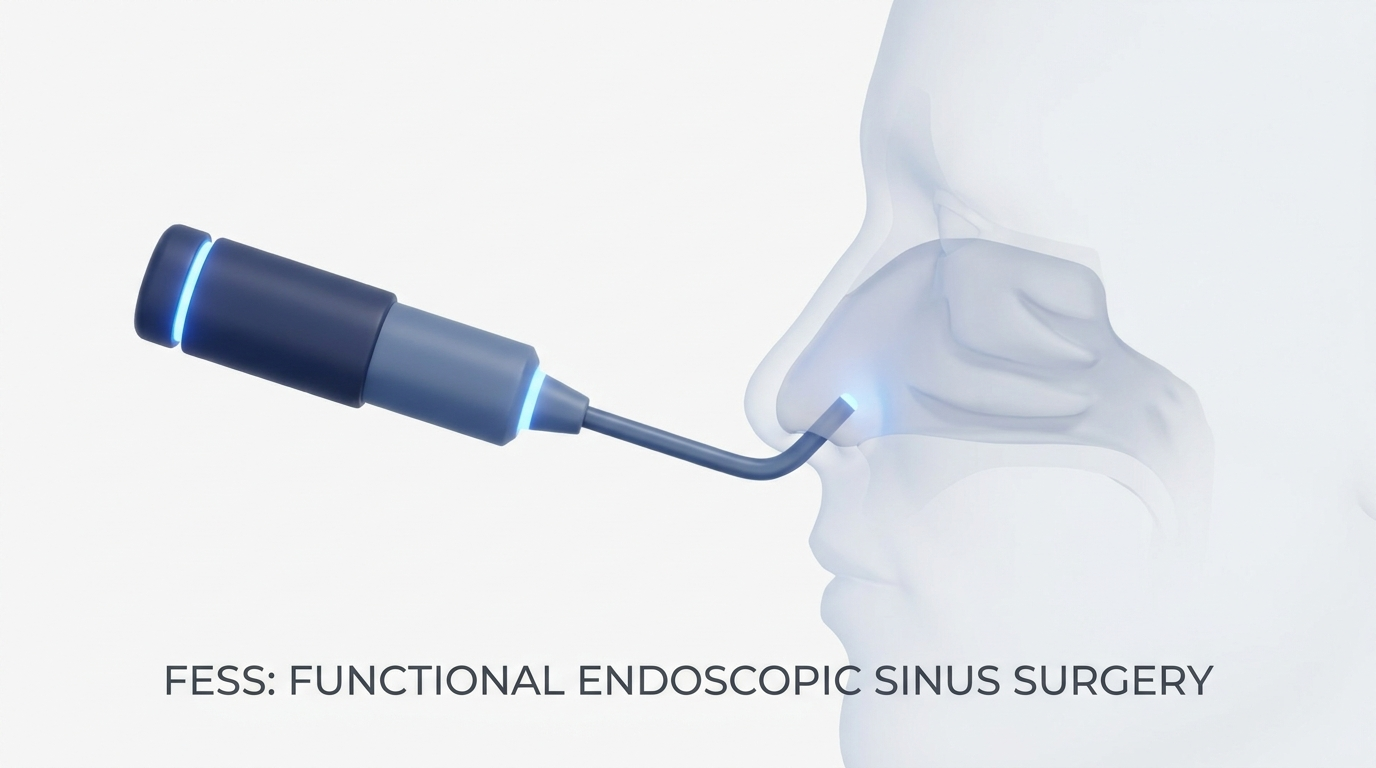
“Functional” and “endoscopic” explained in plain language
• Functional: The goal is to restore natural sinus drainage and airflow pathways, rather than removing large amounts of tissue.
• Endoscopic: The surgeon uses a thin camera (an endoscope) placed through the nostrils. In most cases, this means no external incisions.
Many ENTs describe the “functional” part like this: “We’re trying to reopen the pathways your sinuses were designed to use—so your own anatomy can do its job again.” That emphasis on restoring airflow and drainage is also why post-op care (like rinses and follow-up visits) matters so much.
What conditions FESS is designed to treat
FESS is most often used for inflammatory and infectious sinus disease, especially chronic rhinosinusitis. If you’re researching chronic sinusitis symptoms and treatment, you can also read more on Sleep and Sinus Centers of Georgia’s page on chronic sinusitis: https://sleepandsinuscenters.com/chronic-sinusitis
In real life, this commonly includes people who have tried the usual “sinus playbook” (sprays, rinses, allergy management, and sometimes oral meds) but still have persistent blockage on exam or CT.
FESS vs. “traditional” sinus surgery
Compared with older external/open sinus surgery approaches, modern endoscopic sinus surgery techniques are typically more targeted and aim to preserve normal anatomy when possible. For many patients, that can translate to less disruption and a more manageable recovery experience.
Another practical difference: endoscopic approaches can help create better “access” for topical treatments afterward—so saline or steroid rinses can actually reach areas that used to be sealed off.
Bottom line: FESS focuses on reopening natural pathways through the nostrils—usually without external incisions—to support better long-term sinus function.
Signs and Symptoms That May Lead to FESS Evaluation
Common chronic sinus symptoms
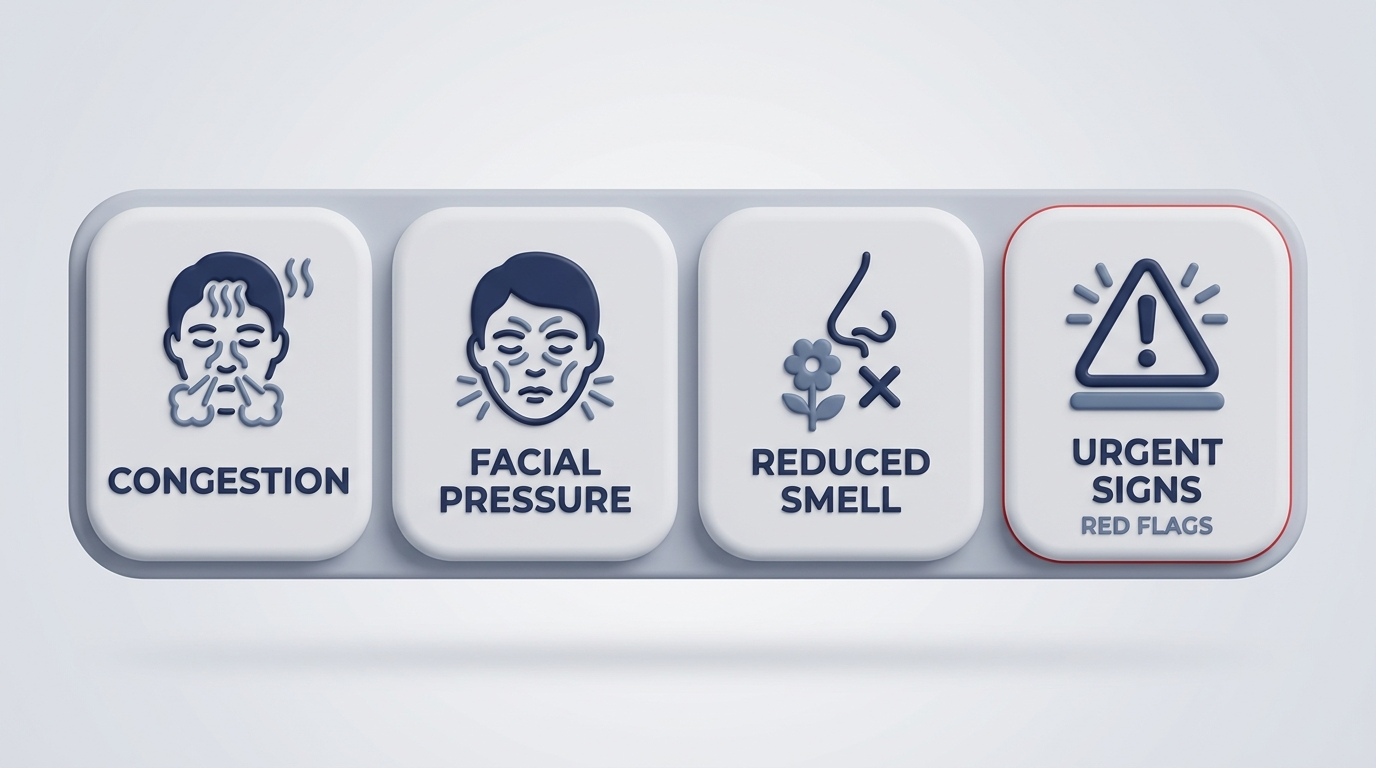
People who consider chronic sinusitis surgery often report symptoms such as:
• Ongoing nasal congestion or blockage
• Facial pressure or fullness
• Thick nasal drainage or post-nasal drip
• Reduced sense of smell
• Headaches or recurring “sinus pressure” that keeps returning
A common pattern is that symptoms improve briefly (for example, after a medication burst) and then return. Another clue is “one-sided” symptoms that keep happening on the same side—something ENTs typically want to evaluate carefully with endoscopy and imaging.
Red flags—when symptoms deserve prompt medical attention
Some symptoms should be evaluated urgently, such as:
• Vision changes
• Significant swelling around the eyes
• High fever with severe symptoms
• Severe headache or neurologic symptoms
(These can have multiple causes—this is simply a reason to seek prompt evaluation.)
If symptoms persist, especially with one-sided blockage or frequent flare-ups, a focused evaluation can help clarify whether FESS is reasonable to consider.
What Causes Chronic Sinus Problems (and Why They Don’t Always Improve With Antibiotics)
Inflammation vs. infection
A common frustration is taking antibiotics and still feeling “sinusy” afterward. That’s because many long-lasting sinus problems are driven more by ongoing inflammation than by active bacterial infection.
In other words, antibiotics may help when bacteria are truly part of the problem—but they don’t “turn off” inflammation. That’s why many treatment plans also lean heavily on topical therapies (rinses/sprays) and identifying triggers like allergies or irritant exposure when relevant.
Structural contributors that can worsen drainage
Even with good medical care, drainage can remain limited when anatomy is working against you. Examples include:
• Naturally narrow sinus drainage pathways
• Common anatomic variations
• Swelling that repeatedly closes the openings
• Scar tissue from prior inflammation or prior procedures
Think of it like a sink with a narrow drain: even small swelling can slow flow dramatically. FESS can widen those drainage pathways so swelling is less likely to “shut the system down.”
Chronic rhinosinusitis with nasal polyps (CRSwNP)
In CRSwNP, soft inflammatory growths (polyps) can:
• Block airflow and sinus drainage
• Reduce smell
• Increase the chance symptoms return without ongoing inflammation control
Today, some patients with CRSwNP may also be candidates for biologic medications for chronic rhinosinusitis with nasal polyps (CRSwNP) to help control inflammation and reduce polyp regrowth—sometimes lowering the likelihood of repeat procedures in select cases.
A useful way to frame this: surgery can address the obstruction, while biologics (for appropriate patients) can help address the inflammatory driver behind it.
Summary: Sinus symptoms often persist due to inflammation and anatomy; FESS targets obstruction, while ongoing medical therapy targets inflammation.
Before Surgery: How ENTs Diagnose and Plan Treatment

The typical workup
Planning for FESS usually starts with confirming what’s happening inside the nose and sinuses. A typical evaluation may include:
• Symptom history and which treatments have already been tried
• An in-office nasal endoscopy exam
• A CT scan to map sinus anatomy and the extent of inflammation or blockage
Patients often find it reassuring that the decision isn’t based on symptoms alone. Objective findings on endoscopy/CT help confirm whether blocked drainage pathways or polyps are truly part of the picture.
Why “personalized” surgical planning matters
No two sinus systems are identical. Modern surgical planning focuses on tailoring the approach to:
• The specific sinuses involved
• Polyp status
• Prior surgeries (if any)
• Anatomic complexity
This is also where technologies like image-guided sinus surgery may be considered for additional precision in certain situations—especially when landmarks are less predictable (for example, revision cases).
Summary: Personalized planning, supported by endoscopy and CT imaging, helps match the right approach to your anatomy and disease pattern.
Non-Surgical Treatments to Try First (and When They’re Not Enough)
First-line medical therapies
Many patients try several options before surgery is even discussed, such as:
• Saline irrigation/rinses
• Intranasal steroid sprays (and sometimes steroid rinses)
• Allergy evaluation and management when relevant
• Short courses of antibiotics or oral steroids when appropriate for the situation
A simple (but important) practical point: technique matters. Rinses done regularly, with correct head positioning and safe water practices, often work better than quick “spray-and-go” routines.
When FESS becomes a reasonable next step
Endoscopic sinus surgery may be considered when there are persistent symptoms plus objective findings (on endoscopy/CT), despite appropriate medical management—or when there is severe blockage (including polyps) or recurrent infections with clear evidence of ongoing disease.
Many clinicians describe the tipping point this way: “If we can see ongoing disease and you’re still suffering after appropriate medical therapy, surgery becomes a tool to reset ventilation and drainage—so medications can work better afterward.”
Summary: When appropriate medical therapy isn’t enough, targeted surgery can be considered to restore drainage and improve medication delivery.
Types of Endonasal Sinus Procedures (FESS Options)
Limited/standard FESS (sometimes called L-FESS)
A limited or standard approach focuses on opening the specific sinus pathways that are most involved, aiming to improve ventilation and drainage while preserving normal structures.
This can be a good fit when disease is present but not widespread across all sinus groups—so the surgery can stay targeted.
Expanded FESS (E-FESS)
“Expanded FESS” generally refers to a more extensive endoscopic opening of sinus pathways when disease is more severe or widespread; the term is not universally standardized. Some studies suggest that, in selected patients, expanded approaches may improve quality of life and possibly reduce revision rates.
The key phrase is “selected patients.” More extensive opening is not automatically better for everyone; it’s a strategic choice based on the CT map, endoscopy findings, and prior history.
Balloon sinuplasty (a related option, not identical to FESS)
Balloon sinuplasty uses a small balloon to dilate certain sinus openings—often with a tissue-sparing goal in carefully selected cases. It is not the same as traditional instrument-based FESS, and it isn’t a fit for every sinus pattern (for example, extensive polyps may still require more traditional techniques). Learn more here: https://sleepandsinuscenters.com/balloon-sinuplasty
In appropriately selected patients, balloon sinuplasty may be associated with less bleeding or discomfort than more extensive surgery.
Summary: In practice, surgeons match the technique—limited FESS, a broader endoscopic approach, or balloon dilation—to your specific anatomy and disease.
Newer Advancements Improving Precision and Comfort
Image-guided sinus surgery (navigation)
Image-guided sinus surgery uses navigation technology that correlates surgical location with CT imaging—helpful in complex anatomy, more extensive disease, or revision cases.
You can think of it like GPS for anatomy: it doesn’t replace surgical skill, but it can add an extra layer of orientation—particularly when working near delicate boundaries.
Balloon technology as a “tissue-sparing” tool (when appropriate)
Balloon tools can be an option for certain blocked sinus pathways and are often used with the goal of widening a narrowed opening without removing much tissue—again, depending on what the disease pattern requires.
Augmented reality (AR) and emerging visualization tools
New visualization methods—including early AR-assisted concepts—aim to support precision and situational awareness during surgery. AR-assisted tools are being studied as ways to support visualization and orientation during surgery, but outcome benefits are still evolving.
Biologic therapies + surgery: a combined strategy for CRSwNP
For some patients with nasal polyps, long-term success is not just about opening sinuses—it’s also about controlling the inflammatory driver. In that setting, biologic medications for chronic rhinosinusitis with nasal polyps (CRSwNP) may be considered alongside surgery to reduce recurrence risk for select individuals.
Summary: Advances like navigation, balloon tools, and biologics are options your surgeon may consider to tailor care and support precision in selected cases.
Step-by-Step: What Happens During the FESS Procedure
Pre-op preparation
Before FESS, patients are typically asked to review:
• Current medications (including blood thinners and supplements)
• Any relevant medical conditions
• Anesthesia planning (FESS is often performed under general anesthesia)
You may also be given a plan for what to do (or stop doing) in the days leading up to surgery, such as medication adjustments and what to expect the day of the procedure.
In the operating room (simple overview)
During surgery:
• An endoscope is placed through the nostril to visualize the nasal cavity and sinus openings
• Inflamed tissue and/or polyps may be removed
• Sinus drainage pathways are gently widened to improve ventilation and drainage
• Image guidance may be used when indicated
For a broader overview of preparation and expectations, see: https://sleepandsinuscenters.com/blog/endoscopic-sinus-surgery-what-patients-should-know
How long does FESS take?
Timing varies based on:
• How many sinuses are involved
• Whether polyps are present
• Whether it’s a first-time vs. revision procedure
• Whether a more extensive approach is needed
If you’re comparing options, it’s reasonable to ask your surgeon what extent of surgery is being recommended and why—because “FESS” can mean different scopes of work depending on your CT findings.
Will packing or stents be used?
Some surgeons use temporary materials to reduce bleeding risk or support healing; others avoid them in many cases. The plan can differ depending on anatomy and intraoperative factors.
If packing is used, patients often want to know how it may affect early congestion and when it will be removed or dissolve—good questions for the pre-op visit.
Summary: A clear pre-op plan and realistic expectations for the day of surgery can make the experience smoother and less stressful.
Benefits of FESS (What Patients Typically Gain)

Many patients pursue FESS to improve daily comfort and reduce the cycle of recurring symptoms. Potential benefits include:
• Improved nasal breathing and less congestion
• Less facial pressure and less thick drainage
• Fewer sinus flare-ups and reduced reliance on repeated medications (for many patients)
• Improved access for topical treatments (like saline and steroid rinses) to reach the sinuses after surgery
• Quality-of-life improvements reported across chronic rhinosinusitis studies
A patient-centered way to summarize the goal: fewer “bad sinus days,” less time spent chasing symptoms, and a clearer runway for long-term inflammation control.
Summary: When appropriate, FESS may improve airflow, reduce flare-ups, and make ongoing medical therapy more effective.
Risks and Potential Complications (Clear, Patient-Friendly)
Common/expected temporary effects
During early healing, it’s common to experience:
• Congestion and swelling
• Mild bleeding/oozing
• Crusting and thick drainage
• Fatigue
Many patients are surprised that they feel more congested at first. That early stuffiness is often part of normal swelling and crusting—one reason post-op rinses and follow-up cleanings are commonly emphasized.
Less common but important surgical risks
Like any procedure, FESS risks can include:
• Significant bleeding
• Infection
• Scar tissue/adhesions
• Persistent symptoms or need for revision surgery
It can be helpful to remember that chronic rhinosinusitis is often a long-term inflammatory condition—so surgery may improve the plumbing, but ongoing management can still be needed to keep inflammation quiet.
Rare but serious risks (why surgeon experience and planning matter)
Because the sinuses sit near the eyes and skull base, rare risks can include:
• Orbital injury (injury near the eye socket)
• Cerebrospinal fluid (CSF) leak
These are uncommon, and careful planning (and tools like navigation in select cases) are part of how teams work to reduce risk.
Risk-reduction strategies
Common safety and quality steps include:
• Detailed CT review and personalized planning
• Image guidance when appropriate
• Scheduled post-op visits to monitor healing and clear crusting
Summary: Risks are uncommon but real; careful planning, technique, and follow-up help reduce them.
FESS Recovery: Timeline + What to Expect
FESS recovery varies by procedure extent and individual healing, but many experiences follow a general pattern.
First 24–72 hours
Many patients notice:
• Significant congestion
• Light bleeding/spotting
• Mild to moderate discomfort that may be managed with a surgeon-directed pain plan
This is also when rest, hydration, and head elevation often make a noticeable difference in comfort.
First 1–2 weeks
This period often includes:
• Crusting and thick drainage
• Fluctuating sense of smell
• Follow-up visits for endoscopic checks/cleaning (commonly part of routine healing support)
Some patients describe this phase as the “clean-out” period—when things are healing, but don’t feel fully open yet.
Weeks 3–6
Many people experience:
• Gradual improvement in airflow and drainage
• Continued internal healing even as day-to-day function feels more normal
Even if you feel significantly better by this stage, internal tissues may still be remodeling—so sticking with the recommended maintenance routine can matter.
Recovery comparison: balloon vs conventional approaches
In appropriately selected patients, balloon-based procedures may be associated with a shorter, less traumatic recovery, including less bleeding or pain compared with more extensive procedures.
Summary: Expect early congestion, gradual improvement by weeks 3–6, and an easier recovery if your anatomy is suitable for less invasive options.
Post-Op Care Tips (Practical Lifestyle Guidance)

Post-op instructions vary by surgeon and procedure type, but many plans emphasize supportive routines.
Saline rinses
Saline irrigation is commonly used to help clear mucus and crusting. Many instructions emphasize water safety (such as sterile/distilled water or properly boiled and cooled water) and careful device hygiene.
A concrete example: if you’re using a squeeze bottle rinse, cleaning and air-drying it between uses is often part of keeping the routine safe and effective.
Activity and work
It’s common to temporarily avoid heavy lifting/straining early on. Return-to-work timing depends on the extent of surgery and job demands.
If your job is physically demanding, ask specifically about lifting limits and timelines. If your work is sedentary, you may still need a few days to manage fatigue and congestion comfortably.
What to avoid
Some patients are asked to avoid early nose blowing, smoke exposure, and dusty environments while healing.
These are common-sense guardrails: less pressure, less irritation, and fewer particles during the most sensitive healing window.
Sleep positioning
Elevation is often used to reduce swelling and improve comfort during early recovery.
When to call the surgeon
Common “call us” concerns after sinus surgery include heavy bleeding, worsening pain, fever, vision changes, or severe headache.
Summary: A simple, consistent post-op routine—especially saline rinses and scheduled follow-ups—supports smoother healing.
Long-Term Results: How to Keep Symptoms From Coming Back
Surgery is not the “end” of treatment for chronic sinusitis
Even when surgery opens the pathways, chronic rhinosinusitis is often a condition that benefits from ongoing inflammation management.
Many ENTs explain it this way: surgery can make the sinuses more “treatable,” but daily/seasonal inflammation control is what helps protect the results.
Maintenance strategies
Long-term plans may include:
• Continued topical therapies (like steroid sprays/rinses) if prescribed
• Allergy treatment when relevant
• Reducing triggers (smoke/irritants, and other contributors identified during evaluation)
For nasal polyps: role of biologics and follow-up
For CRSwNP, ongoing follow-up matters. In select patients, biologic therapy may help reduce polyp recurrence and the need for repeat interventions.
If you have polyps, it’s reasonable to ask what the plan is not only for surgery, but also for long-term prevention—because the “after plan” is often where durable symptom control happens.
Summary: Long-term control comes from keeping inflammation quiet and sticking with the maintenance plan your clinician recommends.
FAQs About FESS
Q: Is FESS painful?
A: Many patients describe pressure and congestion more than sharp pain, but experiences vary depending on the extent of surgery and individual sensitivity.
Q: How long does swelling and congestion last after FESS?
A: Congestion is common in the first days and can fluctuate for weeks as internal swelling improves and crusting clears.
Q: When can I blow my nose after FESS?
A: This depends on your surgeon’s protocol and your healing status.
Q: When can I exercise after surgery?
A: Many plans temporarily limit strenuous activity early on, then gradually return to normal routines.
Q: Will FESS cure my sinusitis permanently?
A: Some patients have long-lasting relief, while others need ongoing medical therapy to control inflammation long-term—especially with nasal polyps or allergies.
Q: What’s the difference between FESS and balloon sinuplasty?
A: FESS uses endoscopic instruments to remove obstruction and open pathways; balloon sinuplasty dilates select openings with a balloon. The best fit depends on anatomy and disease type.
Q: Can biologics replace sinus surgery for nasal polyps?
A: For some patients, biologics may reduce symptoms and polyp size, but they aren’t a universal substitute; treatment is individualized.
Q: How do I know if I need a revision surgery later?
A: Revision discussions typically happen if symptoms return with objective findings on endoscopy or imaging.
Q: Is image-guided surgery safer? When is it used?
A: Navigation can be helpful in complex anatomy, extensive disease, or revision surgery by improving intraoperative orientation.
Conclusion: Is FESS Right for You?
Functional Endoscopic Sinus Surgery (FESS) is designed to treat chronic inflammatory and infectious sinus disease by improving drainage and ventilation—and it may improve quality of life for many patients. Today’s options are more personalized than ever, including limited versus broader endoscopic approaches, image-guided tools, balloon technology in select cases, and biologic therapy strategies for CRSwNP.
If you’re considering next steps, Sleep and Sinus Centers of Georgia can help you compare medical therapy, procedural options, and expected recovery based on your specific anatomy and CT findings.
Ready to get clarity on your options? You can book an appointment with Sleep and Sinus Centers of Georgia here: https://www.sleepandsinuscenters.com/
Sources (research background)
• MDPI (2023): http://mdpi.com/2077-0383/13/3/866
• SAGE Journals (2024): http://journals.sagepub.com/doi/10.1177/01455613241287280
• PubMed (2024): http://pubmed.ncbi.nlm.nih.gov/38924127
• Medical policy summary (Balloon Sinuplasty): http://mo-central.medica.com/Document-Library/pdf/Medical-Policies/Endoscopic-Balloon-Sinuplasty-9667
• Foundational background (PMC): http://pmc.ncbi.nlm.nih.gov/articles/PMC12830507
• Nature (2025): http://nature.com/articles/s41598-025-17787-4
Medical disclaimer
Medical disclaimer: This article is for general educational purposes only and is not medical advice. Diagnosis and treatment decisions should be made with a qualified clinician who can evaluate your symptoms, exam findings, and imaging. If you have urgent symptoms (such as vision changes, significant facial/eye swelling, high fever, severe headache, or neurologic symptoms), seek prompt medical care.
This article is for educational purposes only and is not medical advice. Please consult a qualified healthcare provider for diagnosis and treatment.
Don’t let allergies slow you down. Schedule a comprehensive ENT and allergy evaluation at Sleep and Sinus Centers of Georgia. We’re here to find your triggers and guide you toward lasting relief.