Is Septoplasty Covered by Insurance? Coverage, Costs, and Requirements
Septoplasty is a common procedure that straightens the nasal septum (the wall between the nostrils) to improve airflow. People often consider it when persistent nasal blockage affects sleep, exercise, or day-to-day comfort—especially when “just living with it” turns into constant mouth breathing, uneven airflow, or nighttime congestion.
Is septoplasty covered by insurance? In many cases, yes—septoplasty is often covered by Medicare and many insurers when it’s medically necessary, meaning it’s being done to fix functional breathing or related health problems. If the procedure includes cosmetic goals, those cosmetic portions are typically not covered. Approval often depends on documentation and prior authorization. [1][3][4]
If you’re exploring options, you can also read more about deviated septum relief and how symptoms are evaluated: https://sleepandsinuscenters.com/deviated-septum-relief
What Is Septoplasty (and What It’s Not)?
Septoplasty focuses on function—creating a clearer nasal airway by repositioning or reshaping the septum. It does not aim to change how your nose looks from the outside.
A helpful way to think about coverage is this: insurers usually pay for “repairs” that restore function (breathing), but they typically don’t pay for “remodels” meant to change appearance (cosmetic goals).
Septoplasty: Straightens the septum to improve airflow and reduce obstruction.
Rhinoplasty: Changes the external shape of the nose (bridge, tip, symmetry). It’s often considered cosmetic.
This difference matters because insurers typically separate functional septoplasty versus cosmetic components of a combined septoplasty/rhinoplasty procedure. If the primary goal is breathing improvement, it may qualify as medically necessary. If the primary goal is appearance, those cosmetic portions are usually excluded from coverage. [1]
Procedures commonly done with septoplasty may include turbinate reduction, sinus procedures, and nasal valve repair. When procedures are bundled, it can affect both prior authorization and cost-sharing, because each service may have its own criteria and billing codes.
Bottom line: Septoplasty targets breathing, not appearance, and coverage follows that functional focus.

Symptoms That May Suggest a Deviated Septum Is More Than “Just Annoying”
Not every deviated septum needs surgery—many people have some degree of deviation. Insurance approval often becomes more likely when symptoms are persistent, documented, and clearly functional (meaning they interfere with breathing and daily life).
Common functional symptoms include chronic nasal obstruction (one or both sides), mouth breathing or disturbed sleep due to blockage, and snoring that seems worse with nasal congestion (snoring can have multiple causes).
A concrete example: a patient may report that one nostril “never opens up,” or that they can only exercise comfortably if they use a nasal spray or mouth-breathe. Those details can matter because they show day-to-day impact, not just a mild nuisance.
Symptoms that often strengthen insurance approval include recurrent sinus infections or symptoms consistent with chronic sinusitis, frequent nosebleeds (epistaxis), facial pressure/head pressure tied to nasal blockage, and trouble using CPAP due to nasal obstruction, which can be especially relevant for people treating sleep apnea. [1][3][4]
In practice, an ENT might document something like: “Nasal obstruction is limiting CPAP tolerance,” along with what’s been tried (humidification, mask adjustments, nasal sprays) and what objective findings were seen on exam. For more on CPAP challenges related to nasal blockage, see: https://sleepandsinuscenters.com/is-your-cpap-machine-getting-in-the-way
Bottom line: Persistent, well-documented breathing problems—especially when they affect sleep or CPAP use—can strengthen coverage decisions.
Causes of a Deviated Septum (Why It Happens)
A deviated septum can be caused by injury or trauma (sports injuries, falls, accidents), natural growth/asymmetry as the face develops, or prior nasal surgery and longstanding inflammation/swelling patterns.
Understanding the “why” can be helpful for your own timeline (for example, symptoms that worsened after an injury). For coverage decisions, insurers focus more on current symptoms, exam findings, and response to treatment than on the original cause.
Bottom line: Cause matters less for coverage than current symptoms, exam findings, and treatment response.

Treatments to Try Before Surgery (What Insurers Usually Expect)
Many insurers want to see that appropriate non-surgical options were attempted before approving surgery. This is often described as a trial of “medical management.”
Conservative options may include saline rinses, topical steroid nasal sprays, allergy management strategies, and antihistamines or decongestants when appropriate.
If these steps help, surgery may not be necessary. If they don’t help enough, the fact that they were attempted—and documented—can support medical necessity.
“Failed medical management” is commonly defined as documented symptoms despite medical therapy over a period such as 4+ weeks, though exact timeframes vary by plan. [1]
If you’re still deciding whether surgery fits your situation, this guide may help: https://sleepandsinuscenters.com/blog/is-septoplasty-right-for-your-deviated-septum
Bottom line: Most plans expect a documented trial of medical therapy before approving surgery, though exact timeframes vary by plan.
When Is Septoplasty Covered by Insurance?
The key standard is medical necessity. Most plans cover septoplasty when it’s expected to improve functional problems—not appearance—and the medical record supports that need. Coverage usually hinges on whether the procedure meets medical necessity criteria. [1][3][4]
Examples of commonly covered indications include nasal obstruction affecting daily life despite medical therapy, recurrent sinus infections linked to obstruction, recurrent epistaxis related to septal deformity, and inability to tolerate CPAP due to nasal blockage (with supporting documentation). [1][3][4]
Coverage is typically denied when the request is primarily for appearance, when it’s part of a cosmetic rhinoplasty and the functional need isn’t clearly supported, or when records don’t show an adequate medical therapy trial or objective findings. [1]
Denials don’t always mean “never.” Sometimes they mean “not documented the way the plan requires,” which is why prior authorization details and complete records matter.
Bottom line: If records clearly show functional obstruction and insufficient relief from medical therapy, coverage is more likely.
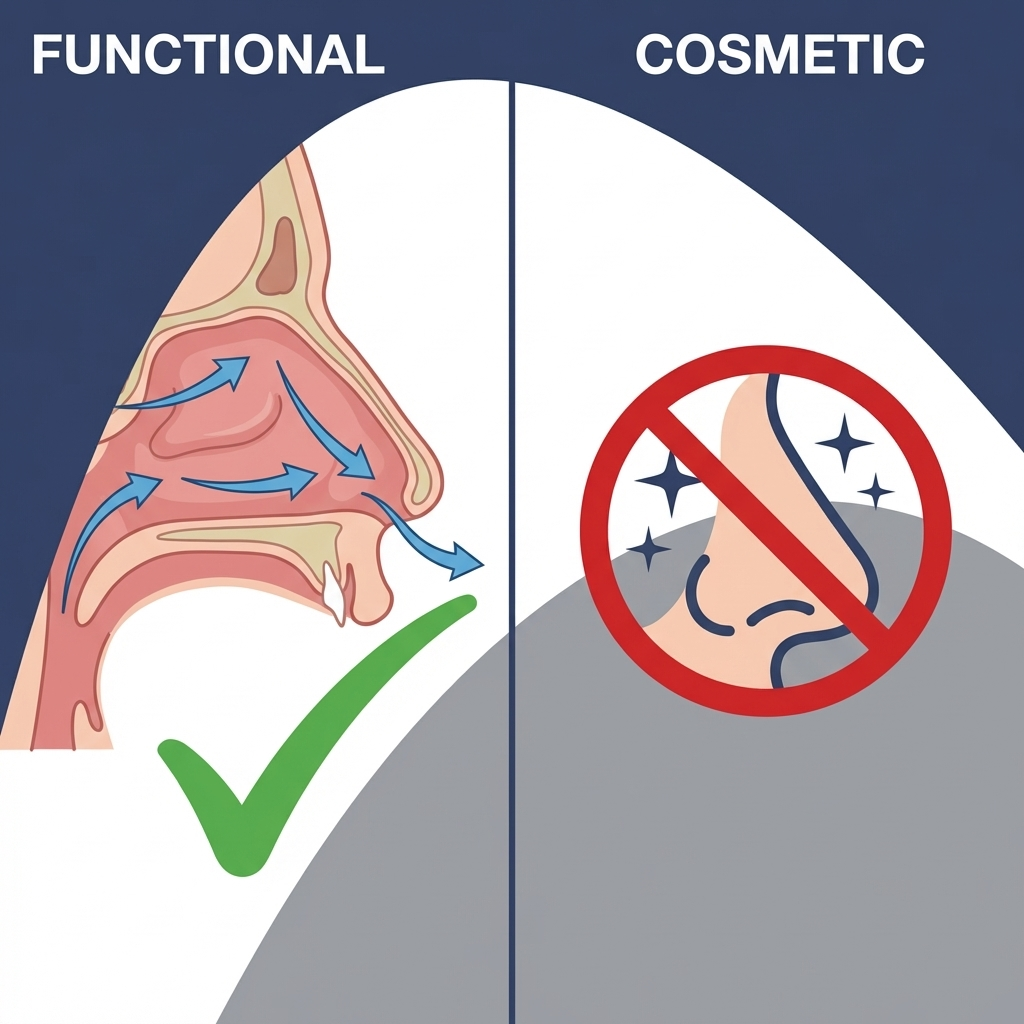
Functional vs. Cosmetic: How Insurers Decide
Cosmetic generally means the primary purpose is to improve appearance (shape, profile, tip definition, symmetry). Cosmetic services are typically excluded, even if they’re performed in a medical setting.
Functional means the goal is to improve breathing/airflow, with documentation such as persistent symptoms, objective exam findings (deviation/obstruction), and evidence that conservative treatment didn’t resolve the problem. [1]
A patient-friendly way to frame it: if the main “before and after” is how you breathe, that’s functional. If the main “before and after” is how it looks, that’s cosmetic.
If you’re having septoplasty and rhinoplasty together, only the medically necessary portion may be eligible for coverage, and cosmetic components may be billed separately (surgeon, facility, and anesthesia charges can differ). [1]
Bottom line: Insurers separate functional needs from cosmetic goals; only the functional portion is typically eligible for coverage.
Coverage by Plan Type (Medicare vs. Private Insurance)
Original Medicare (Part B): Septoplasty is often an outpatient procedure under Part B. In general, Medicare pays 80% of the Medicare-approved amount after the Part B deductible is met, and the patient is responsible for 20% coinsurance (plus any unmet deductible), when covered and billed under Medicare rules. [3] Approved amounts vary by setting and location.
Medicare Advantage (Part C): Must cover Medicare benefits but may have different network rules, copays/coinsurance, and authorization requirements.
Private insurance (Aetna, BCBS, UnitedHealthcare, etc.): Many plans cover septoplasty when criteria are met, but requirements vary by plan. Documentation standards, conservative therapy duration, and whether imaging is expected can differ. [1][4]
Bottom line: Coverage pathways differ by plan—confirm network status, cost-sharing, and authorization rules up front.

Requirements to Get Septoplasty Approved (What You’ll Likely Need)
ENT evaluation and objective findings typically include documentation of septal deviation and degree of obstruction, possibly nasal endoscopy, and imaging in some scenarios (often more relevant when sinus disease is being evaluated).
Insurers respond best to notes that connect the dots: symptoms → exam findings → treatments tried and response → why surgery is expected to help.
Documentation your surgeon may submit includes symptom severity, frequency, and duration; impact on sleep, work, or daily activities; treatments tried and response; and related conditions affected (sinusitis patterns, epistaxis, CPAP intolerance). [1]
Prior authorization means the insurer reviews the request before surgery to confirm it meets coverage criteria. Common reasons for delay or denial include missing documentation of failed medical management, notes that don’t clearly describe functional impairment, and coding mismatches that make the request look cosmetic rather than functional. [1]
Bottom line: Clear, complete documentation and accurate coding are essential to smooth prior authorization and approval.

How Much Does Septoplasty Cost With Insurance?
There isn’t one universal number because costs depend on your plan design and where the surgery is performed. It helps to understand what drives the total and what portion you may owe.
Your bill may include surgeon fee, facility fee (hospital vs outpatient surgery center), anesthesia, pre-op testing and post-op visits, and any add-on procedures (turbinate reduction, sinus surgery).
Even when approved, you may still owe deductible, coinsurance or copays, out-of-network charges (especially if anesthesia or facility is out-of-network), and separate cosmetic fees if combined with rhinoplasty. [1]
For a deeper walkthrough, see: https://sleepandsinuscenters.com/blog/septoplasty-cost-with-insurance-how-much-will-you-20260124051008
Medicare cost reality check: Use Medicare’s Procedure Price Lookup (CPT 30520) to see typical approved amounts by location/setting, then apply the general 80/20 cost-sharing structure, subject to deductibles and plan rules. [2][3]
Bottom line: Your costs depend on plan design, network status, location/setting, and any combined procedures.
Step-by-Step: How to Verify Your Septoplasty Coverage Before Scheduling
Questions to ask your insurance company: Is septoplasty covered for my diagnosis? Is prior authorization required? What are my outpatient surgery deductible and coinsurance/copay? Do I need a referral? Are the surgeon, facility, and anesthesia all in-network?
If you only ask one extra question, make it this: Can you confirm network status for the facility and anesthesia?
Questions to ask your ENT office: What diagnosis codes and CPT codes will be submitted? What documentation will you include to support medical necessity? Will you submit prior authorization and help with appeals if needed?
Get a written estimate: Ask for a written pre-treatment estimate; if any portion is cosmetic, request a separate quote for that part.
Bottom line: Verify coverage, network status, and prior authorization in writing before you schedule.
Tips to Lower Out-of-Pocket Costs (Patient-Friendly)
Choose in-network providers and confirm anesthesia network status. Use HSA/FSA funds if eligible. Consider timing if you’ve already met much of your deductible. Ask about payment plans for non-covered portions, especially if combining functional and cosmetic work.
Bottom line: Small planning steps can significantly reduce out-of-pocket costs.
FAQs: Septoplasty Insurance Coverage
Is septoplasty covered if I snore? Sometimes. Snoring alone usually isn’t enough for approval, but snoring plus documented nasal obstruction and functional impairment may support medical necessity. [1]
Will insurance cover septoplasty if I can’t use CPAP? Often, yes—when documentation shows nasal obstruction is a barrier to CPAP use and conservative measures have been tried. [1][3][4]
Do I need a CT scan for insurance to approve septoplasty? Not always. Many approvals rely more on symptoms, exam findings, and documentation of medical management. Imaging may be more common when sinus disease is also being evaluated. [1]
Can insurance deny septoplasty even if I can’t breathe well? Yes. Denials often happen due to missing documentation, an insufficient trial of medical therapy, or confusion about functional vs cosmetic intent. Appeals are sometimes possible. [1]
Does Medicare cover deviated septum surgery? Generally yes, when medically necessary. For outpatient septoplasty, Part B cost-sharing commonly applies (after the deductible, Medicare often pays 80% and the patient pays 20%), subject to Medicare billing rules. [3][2]
Conclusion
In most cases, whether septoplasty is covered comes down to medical necessity. If symptoms are persistent, conservative treatment hasn’t helped, and the ENT exam documents functional obstruction, coverage is often available—though prior authorization and detailed documentation may be required. [1][3][4]
Ready to get clear answers for your specific plan? Visit https://www.sleepandsinuscenters.com/ to book an appointment with Sleep and Sinus Centers of Georgia for an ENT evaluation and help verifying coverage before you schedule.
References
[1] Aetna Clinical Policy Bulletin: Septoplasty and Rhinoplasty (2025) — https://www.aetna.com/cpb/medical/data/1_99/0005.html
[2] Medicare.gov Procedure Price Lookup – CPT 30520 (accessed 2026) — https://www.medicare.gov/procedure-price-lookup/cost/30520
[3] Healthline: Does Medicare cover deviated septum surgery? (2024–2025) — https://www.healthline.com/health/medicare/does-medicare-cover-deviated-septum-surgery
[4] Medical News Today: Does Medicare cover deviated septum surgery? (2025) — https://www.medicalnewstoday.com/articles/does-medicare-cover-deviated-septum-surgery
This article is for educational purposes only and is not medical advice. Please consult a qualified healthcare provider for diagnosis and treatment.
Don’t let allergies slow you down. Schedule a comprehensive ENT and allergy evaluation at Sleep and Sinus Centers of Georgia. We’re here to find your triggers and guide you toward lasting relief.