Nose Expander for Sleeping: Benefits, How It Works, and Best Options
If you’ve ever rolled onto your back and felt your nose “shut down,” you’re not alone. A nose expander for sleeping (also called a nasal dilator) is designed to gently open the narrowest part of the nasal airway so breathing feels easier at night.
Many people notice an immediate difference in airflow—almost like someone “turned down” the resistance in their nose. But it’s important to separate that clearer-nose sensation from measurable changes in snoring or obstructive sleep apnea (OSA).
Below is a practical, research-informed guide to what nasal dilators can (and can’t) do, how to choose between options, and how to use them safely.
Quick Take: Do Nose Expanders Actually Help at Night?
What most people notice
Most users notice a subjective improvement: nasal breathing feels easier, especially when lying down, during seasonal allergies, or in dry air. For some, that comfort change is meaningful—less “air hunger,” less tossing and turning, and less temptation to switch to mouth breathing.
A common patient comment is: “I don’t feel cured, but I feel less blocked the moment I put it on.” That’s the core benefit these products are best at delivering—comfort and airflow sensation.
What research shows
Systematic reviews and pooled analyses suggest nasal dilators generally do not reliably reduce obstructive sleep apnea severity (such as the apnea–hypopnea index) or objective snoring measures for most users. In limited data, internal (intranasal) dilators show a modest trend toward lowering AHI in some cases, while external nasal strips often show no benefit; a few analyses reported no improvement or inconsistent changes in AHI. Objective sleep outcomes such as oxygen levels and sleep architecture have generally shown little change in pooled studies. [1][2]
The takeaway: a nasal dilator can be a low-cost, generally low-risk adjunct for nasal obstruction symptoms, but it’s not a replacement for CPAP or other proven treatments for obstructive sleep apnea. [1][2]
In short: helpful for how your nose feels at night, but not a proven fix for sleep apnea.

What Is a Nose Expander (Nasal Dilator)?
Common names
You may see these labeled as a nasal dilator for sleep, nose expander, nasal strip, or nasal valve opener. Different names, same basic concept: mechanically improving nasal airflow by widening or supporting the nostril sidewalls.
Two main types
- External nasal dilators: adhesive strips worn across the bridge/sidewalls of the nose
- Internal nasal dilators: small devices worn just inside the nostrils (an internal nasal dilator)
If you want a deeper comparison between the two styles, see our guide on nasal strips vs internal dilators: https://sleepandsinuscenters.com/blog/nasal-strips-vs-internal-dilators-which-is-best-for-better-breathing
Choose the style you’ll actually wear comfortably—fit and comfort drive real-world benefit.

How a Nose Expander Works (Simple Anatomy)
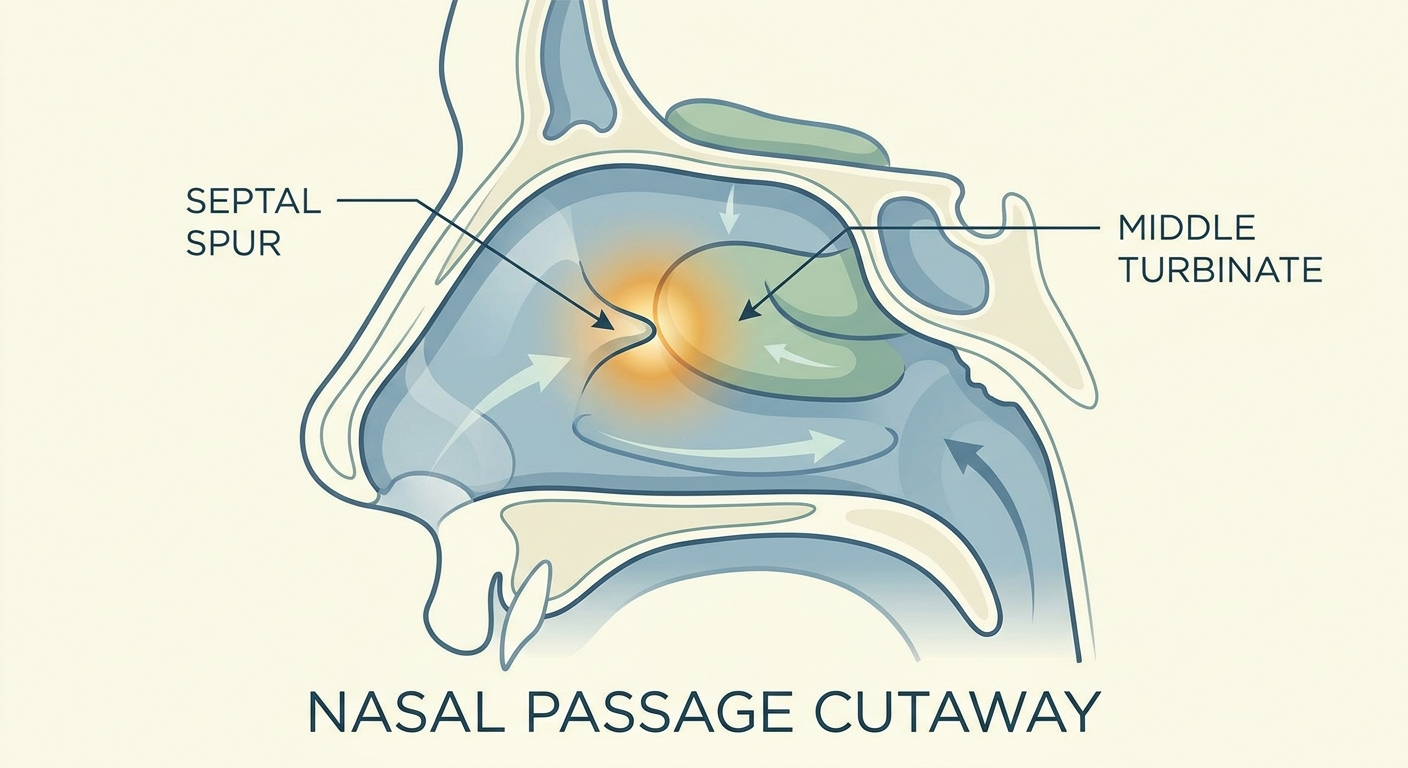
The internal nasal valve—your nose’s “pinch point”
The internal nasal valve is typically the narrowest part of the nasal airway. Think of it like the “neck” of an hourglass: even small swelling or slight inward collapse can noticeably reduce airflow.
For some people—especially those with narrower anatomy, inflammation, or nasal valve collapse—this area becomes a bottleneck. Lying down can also make congestion and soft‑tissue narrowing feel more obvious, particularly if one side of the nose tends to dominate at night.
What dilators change
- reduce inward collapse of the nostril sidewalls during inhalation
- gently widen the narrowest segment to improve airflow
A helpful analogy: they act like tiny “support beams” or “tent poles” for the soft outer nasal wall—subtle, but sometimes enough to reduce that collapsing, pinched feeling when you inhale.
Why better nasal airflow can feel like better sleep
- reduce the “stuffy” sensation that disrupts falling asleep
- decrease mouth breathing for some people
- make nasal CPAP interfaces feel more tolerable in some situations
This is why some people keep using a dilator even when it doesn’t dramatically change snoring reports from a bed partner—it still makes bedtime feel easier.
Think of a nasal dilator as a small mechanical assist for a small but important bottleneck.

Symptoms That Suggest a Nose Expander Might Help
Nighttime symptoms
- difficulty breathing through your nose when you lie down
- one nostril consistently “plugging” at night
- dry mouth on waking (often related to mouth breathing)
Snoring-related symptoms
- snoring that worsens with colds, allergies, or travel‑related dryness
- snoring that seems better when your nose feels clear
People with congestion‑related snoring may notice more benefit from a trial of a nasal dilator, while symptoms like witnessed breathing pauses or significant daytime sleepiness warrant medical evaluation.
When symptoms may indicate something more serious
Loud snoring plus choking/gasping, witnessed breathing pauses, morning headaches, or excessive daytime sleepiness can be associated with sleep apnea. In that situation, a device may be an add‑on—but an evaluation is often the more important next step.
If nasal blockage is the main issue, a trial can be reasonable; if pauses in breathing are suspected, seek evaluation.
Common Causes of Nighttime Nasal Blockage (And Why They Matter)
Inflammation/congestion
- allergic rhinitis
- nonallergic rhinitis
- viral colds
Structural blockage
- deviated septum
- turbinate enlargement
- nasal valve collapse
Environmental triggers
- dry air (especially in winter or hotel rooms)
- irritants (smoke, strong fragrances, cleaning products)
- dust/pets and seasonal pollen
Medication-related congestion
Overuse of topical decongestant sprays can contribute to rebound congestion (a cycle of worsening blockage when the spray wears off). If you’re stuck in that cycle, a dilator may feel helpful temporarily, but addressing the underlying rebound pattern is usually the bigger win.
A dilator may ease the sensation of blockage, but treating the underlying cause typically works better long‑term.
Benefits of Using a Nose Expander for Sleeping
Potential benefits (most supported by user experience)
People typically try a nasal dilator for comfort‑focused reasons, such as:
- an easier nasal breathing sensation at night
- less mouth breathing in some people
- temporary help during colds, allergy flares, and dry environments
For many, the “success metric” is simple: “Do I feel less blocked when I’m trying to fall asleep?” A nasal dilator may help improve the sensation of nasal airflow, but it does not treat the underlying cause of obstruction.
Possible snoring benefit (set expectations)
Some users report less snoring, particularly when nasal congestion is a major driver. But overall, research is mixed and objective improvements are inconsistent. [1][2]
Possible CPAP comfort benefit
If you use CPAP and feel “blocked” with a nasal mask or nasal pillows, improving nasal airflow can sometimes make the experience more tolerable—especially at the start of the night when you’re settling in.
For practical next steps, see our resource on blocked nose during CPAP: https://sleepandsinuscenters.com/blog/blocked-nose-during-cpap-ent-strategies
Expect comfort and airflow sensation gains; don’t expect a cure for snoring or sleep apnea.
What the Science Says About Snoring and Sleep Apnea
Nasal breathing feels better—but sleep apnea metrics often don’t change
Across systematic reviews, nasal dilators tend to improve subjective nasal breathing, but objective sleep apnea severity often stays similar for most patients. That includes limited change in the AHI score (a common measure used to grade sleep apnea severity). [1][2]
Learn more: AHI score explained: https://sleepandsinuscenters.com/blog/ahi-score-explained-understanding-your-sleep-apnea-severity
Internal vs external devices: what’s different
- Internal dilators: modest trend toward reducing AHI in limited cases
- External strips: often no objective benefit; a few analyses reported no improvement or inconsistent AHI changes [1]
This is one reason “which type fits your anatomy and comfort” matters. If a strip lifts the outside but doesn’t meaningfully support a collapsing valve, you may not notice much beyond mild comfort. If an internal device is uncomfortable, you won’t keep it in long enough to matter.
Objective outcomes that usually show little change
In pooled studies, measures like oxygen saturation, snoring index, and sleep stages (sleep architecture) have generally shown little change. [1][2]
Bottom line for patients
A nasal dilator can help nasal obstruction symptoms, but it should be viewed as an adjunct—not a stand‑alone treatment for obstructive sleep apnea.
The evidence supports comfort benefits; sleep‑study metrics often remain largely unchanged.
Who Should (and Shouldn’t) Try a Nose Expander
Best candidates
- mild nighttime nasal congestion
- symptoms consistent with nasal valve narrowing/collapse (nostrils cave inward when inhaling)
- interest in a low‑cost experiment before escalating to testing or procedural options
People who need a medical evaluation instead of (or in addition to) a dilator
- loud, frequent snoring or witnessed apneas
- significant daytime sleepiness
- known OSA with poor control or difficulty tolerating therapy
A helpful framing: if the main concern is a sensation of stuffiness, a short trial may be reasonable; if there are signs of disordered breathing, seek testing and clinician guidance.
Caution/avoid
- frequent nosebleeds
- significant nasal pain, sores, or irritation
- recent nasal surgery (unless cleared)
- adhesive sensitivity (for external strips) or intolerance to internal devices
Try a dilator for mild blockage symptoms; seek evaluation for red‑flag snoring or suspected apneas.
Best Nose Expander Options for Sleeping (How to Choose)
Think of this as a fit‑and‑use‑case decision more than a “best overall” product category.
External nasal strips—best for
- don’t want anything inside your nose
- need short‑term help during travel or congestion
What to look for:
- size/width options (a better fit improves performance)
- adhesive type (standard vs sensitive‑skin)
- flexibility/“spring” strength (too stiff can irritate; too soft may not help)
Internal nasal dilators—best for
- suspect nasal valve narrowing/collapse
- tried strips and didn’t feel enough benefit
What to look for:
- soft, medical‑grade material
- multiple sizes (fit matters)
- low‑profile shape for sleep comfort
- easy cleaning and smooth edges
If you’re considering a reusable internal device, this overview can help set expectations: https://sleepandsinuscenters.com/blog/are-reusable-nasal-dilators-effective-ent-perspective
Reusable vs disposable
- Reusable internal devices: may save money over time but require regular cleaning
- Disposable strips: convenient, but recurring cost and possible skin irritation
If you use CPAP
Compatibility depends on your interface (nasal pillows vs nasal mask vs full‑face). Some people do best by testing fit while awake first, watching for pressure points and mask leaks.
The “best” option is the one that fits your anatomy, feels comfortable, and is easy to use consistently.

How to Use a Nose Expander Safely (Step‑by‑Step)
External strips
Common best practices include:
- start with clean, dry skin (oils reduce adhesion)
- position the strip to lift the nasal sidewalls (not too high on the bridge)
- remove gently to reduce irritation (some people prefer removing after warm water exposure)
If you remove a strip and the skin looks angry or sore, consider a sensitive‑skin adhesive, taking a night off, or switching to an internal option.
Internal dilators
- choose the size that feels supportive but not painful
- insert so it sits comfortably and doesn’t create sharp pressure
- clean after use per product instructions to reduce irritation and buildup
Common troubleshooting
- Slipping: may indicate sizing/placement issues or oily skin
- Discomfort: may mean the device is too large or too rigid
- Waking up to remove it: try a different size/material or alternate style
- Dryness: bedroom humidity and saline products can be part of a broader comfort strategy
Start with careful sizing and gentle technique; comfort is the key to sticking with it.
Side Effects, Risks, and Safety
Typical minor side effects
- Skin irritation or redness (external strips)
- Nasal pressure or tenderness (internal devices)
- Dryness (either type)
Safety profile
Overall, nasal dilators are generally considered low‑risk, with mostly minor local adverse effects reported in systematic reviews. [1][2]
When to stop and call a clinician
Pain, bleeding, sores, worsening obstruction, or signs of infection are good reasons to pause use and seek guidance.
Most side effects are minor and local; stop and seek care if you develop pain, bleeding, or sores.
Treatments That Address the Root Cause (When a Dilator Isn’t Enough)
For congestion/inflammation
Depending on the cause, broader strategies may include saline irrigation, allergy management, and reducing triggers. If nasal congestion is frequent or seasonal, treating inflammation directly often does more than mechanically “propping” the airway open.
For structural blockage
Persistent obstruction may warrant evaluation for septal deviation, turbinate hypertrophy, or nasal valve collapse. A dilator can hint that valve support helps, but it can’t diagnose the underlying anatomy.
For obstructive sleep apnea
Evidence‑based options include CPAP/APAP, oral appliance therapy for appropriate candidates, and other therapies based on anatomy and severity. Nasal dilators may be used as an adjunct but are not definitive OSA therapy. [1][2]
Addressing the root cause—whether inflammation, structure, or OSA—delivers more durable results.

Lifestyle Tips to Breathe Better at Night (With or Without a Nose Expander)
Bedroom setup
- Aim for comfortable humidity (too‑dry air can worsen nighttime nasal congestion)
- Reduce dust exposure (bedding routines and filtration can help)
- Consider pet exposure if symptoms flare at night
Sleep positioning
Side sleeping and slight head‑of‑bed elevation can make congestion feel less intense for some people—especially when one nostril tends to block when you lie flat.
Timing habits
A warm shower before bed during allergy season, and avoiding late alcohol if it worsens congestion/snoring, can be helpful for some households.
Small habit changes often complement the mechanical support of a nasal dilator.
FAQs About Nose Expanders for Sleeping
Do nose expanders stop snoring?
Sometimes—especially if snoring is driven by nasal blockage—but results vary and objective evidence is inconsistent. [1][2]
Can a nose expander treat sleep apnea?
Not reliably. Most studies show little consistent improvement in AHI for most patients. [1][2]
Are internal nasal dilators better than strips?
Internal devices show a modest trend toward better AHI outcomes in limited data, but comfort and fit often determine whether someone can use them consistently. [1]
Can nasal strips make sleep apnea worse?
Some studies have not found benefit from external nasal strips, and a few analyses reported no improvement or inconsistent changes in AHI. If sleep apnea symptoms are present, evaluation and proven therapy should take priority. [1]
Can I use a nose expander with CPAP?
Often yes, but mask fit and leaks matter. Persistent CPAP nasal blockage is also a reason to discuss nasal strategies with your care team.
How do I know if I have nasal valve collapse?
A common clue is nostril sidewalls collapsing inward during inhalation; an ENT exam can confirm.
Use nasal dilators for comfort, but rely on evaluation and proven therapies for snoring and OSA.
When to See an ENT or Sleep Specialist
Red flags
- loud nightly snoring
- witnessed pauses in breathing, gasping/choking
- severe daytime sleepiness
- morning headaches or high blood pressure concerns
What an evaluation may include
An assessment may involve a nasal exam (sometimes endoscopy), allergy evaluation, and/or sleep testing depending on symptoms.
If you’d like an evaluation, you can request an appointment with Sleep and Sinus Centers of Georgia: https://www.sleepandsinuscenters.com/
If symptoms suggest sleep apnea or persistent obstruction, timely evaluation is the safest next step.
Conclusion: A Helpful Adjunct—Not a Stand‑Alone Fix
A nasal dilator can improve how breathing feels at night and may be especially useful during congestion or in people with nasal valve narrowing. It’s generally safe and inexpensive to trial. But research shows it is not a dependable treatment for obstructive sleep apnea, and objective outcomes like AHI and oxygen levels often show little change. [1][2]
If your main issue is mild nighttime nasal congestion, a short, safe trial may be reasonable. If sleep apnea symptoms are present or obstruction is persistent, consider an evaluation through Sleep and Sinus Centers of Georgia for guidance on evidence‑based options: https://sleepandsinuscenters.com/
Use nasal dilators for comfort, and pair them with medical evaluation when symptoms suggest more than simple nasal blockage.
References
[1] Systematic review & meta‑analysis (2022) on nasal dilators for sleep‑disordered breathing: https://pmc.ncbi.nlm.nih.gov/articles/PMC12761343/
[2] Systematic review (2016) on nasal dilators for snoring and obstructive sleep apnea: https://pmc.ncbi.nlm.nih.gov/articles/PMC5187471/
This article is for educational purposes only and is not medical advice. Please consult a qualified healthcare provider for diagnosis and treatment.
Don’t let allergies slow you down. Schedule a comprehensive ENT and allergy evaluation at Sleep and Sinus Centers of Georgia. We’re here to find your triggers and guide you toward lasting relief.