Why Georgia Homes Make Sinus Symptoms Worse: Common Indoor Triggers and Solutions
If you’ve noticed your nose feels clearer when you’re away—at work, running errands, or traveling—but congestion and pressure creep back soon after you get home, you’re not imagining it. For many people, Georgia homes sinus symptoms flare because indoor air in our region often contains a challenging mix of moisture, particles, and irritants that can inflame sensitive nasal tissue.
This guide covers: common symptoms, Georgia-specific indoor triggers, practical home fixes, and when it makes sense to see an ENT—especially if you’re dealing with recurring “sinus infections” or ongoing nasal obstruction.
Georgia’s humid subtropical weather creates long stretches of damp conditions, which can support mold growth and dust mites much of the year. That “background moisture” is a major reason Georgia homes sinus symptoms can feel worse indoors than outdoors—particularly in tightly sealed, air-conditioned homes where moisture can get trapped.
Quick Symptom Check — What “Home-Triggered” Sinus Problems Can Feel Like
Common sinus and nasal symptoms linked to indoor irritants
Indoor triggers don’t always feel like a classic allergy attack (sneezing fits and itchy eyes). They often show up as persistent, nagging inflammation—more like a low-grade swelling in the nose—such as:
• Stuffy nose / nasal congestion
• Post-nasal drip and frequent throat clearing
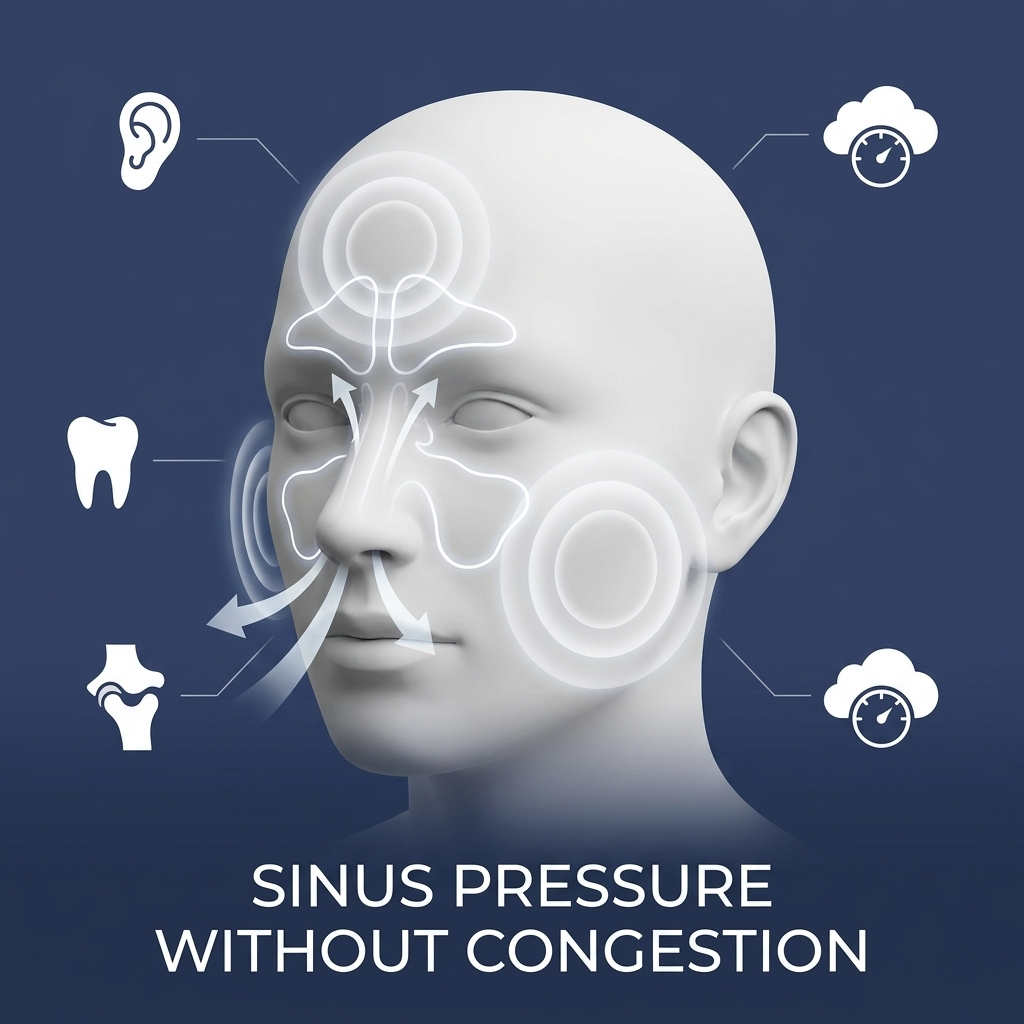
• Facial pressure, headache, or a “full” feeling behind the cheeks/eyes
• Ear pressure or fullness
• Reduced sense of smell
• Cough (often worse at night) and disrupted sleep
• Frequent episodes of sinus infections (as diagnosed by a healthcare provider) that keep coming back
Clinicians often hear versions of: “I’m fine by mid-day, but I wake up clogged every morning,” which can be a clue that the bedroom environment is playing a role.
If you want a fuller checklist, see Sleep & Sinus Centers of Georgia’s overview of common sinus symptoms: https://sleepandsinuscenters.com/symptoms-of-sinus-problems
Clues the trigger may be indoors (not just outdoor pollen)
A few patterns commonly point to indoor contributors:
• Symptoms are worse overnight or upon waking; this may indicate indoor triggers, but always consider other factors as well
• Flares after rainy weeks or during HVAC-heavy seasons (summer AC / winter heat)
• Symptoms seem concentrated in one room (often the bedroom, basement, or a bathroom)
• Other household members have similar symptoms—or only one person does (both can happen)
A practical way to think about it: if your home environment is the “exposure,” your body gets the longest dose while you sleep—often 6–9 hours in the same air.
If mornings are your worst time, start by investigating the bedroom’s humidity, bedding, and ventilation.

Why Georgia Homes Are a Perfect Storm for Sinus Irritation
Georgia humidity supports mold growth for long stretches of the year
When indoor moisture stays elevated, it becomes easier for mold and dust mites to thrive—especially in places you don’t regularly see (behind furniture, under sinks, in crawlspaces, around windows). In Georgia, it’s common for humid conditions to linger for months, which can quietly raise indoor dampness and set the stage for Georgia humidity mold issues.
Think of humidity like “fuel.” If a home has even small water sources—minor leaks, damp crawlspaces, or slow bathroom drying—humidity can keep the fuel tank full.
Temperature swings + air conditioning can aggravate nasal tissues
Going from hot, humid outdoor air to cool indoor air can bother already-inflamed nasal passages. Some people describe nasal tissue “tightening,” a sensation of congestion, or dryness when the AC kicks on. On top of that, AC systems can create HVAC condensation mold risks: moisture forms near coils and drain pans, and that damp environment can support growth if it isn’t draining or drying properly.
Sleep & Sinus Centers of Georgia highlights common “hot spots” around the home, including areas near HVAC components and vents. 1
Important nuance: it’s not always a classic “mold allergy”
Some people assume, “If it’s mold, allergy testing will prove it.” But research suggests that people in damp/moldy housing can experience chronic nasal symptoms due to nonspecific inflammation from irritants, not only a traditional IgE-mediated allergy response. 5
In real life, that means indoor mold sinus symptoms can be very real even when allergy tests don’t clearly confirm mold sensitivity—because irritation and inflammation can happen through more than one pathway.
In Georgia’s long humid season, controlling moisture often matters as much as confirming allergy labels.

The Most Common Indoor Triggers in Georgia Homes (and Where They Hide)
Think of this as a quick “walk-through” of your home—where triggers tend to live, and why they matter for Georgia homes sinus symptoms.
Mold spores (the #1 Georgia indoor culprit)
How it affects sinuses: Mold spores and fragments can irritate the nasal lining, contributing to swelling, congestion, and inflammation. 5 Some people notice a musty odor triggers symptoms before they see any visible spots.
Common home hot spots:
• Bathrooms: shower grout, recurring mildew, exhaust fan ducting, under-sink leaks 1
• Kitchens: plumbing leaks under the sink, around dishwashers, behind refrigerators 1
• Basements/crawlspaces: damp foundation walls, stored cardboard, poor airflow 1
• Around HVAC: coils, drain pan, ducts, registers 1
Moisture after storms can make this worse—Sleep & Sinus Centers of Georgia notes that after rain, indoor dampness can rise and mold can grow quickly if conditions are right. 3
Related reading: Atlanta Home Mold Hot Spots — Common Areas Prone to Mold Growth: https://sleepandsinuscenters.com/blog/atlanta-home-mold-hot-spots-common-areas-prone-to-mold-growth

Dust mites (they love humid environments)
Dust mites Georgia is a common issue because mites thrive more when humidity is higher. Bedrooms tend to be ground zero because mites live in soft materials:
• Mattresses and pillows
• Carpets and rugs
• Upholstered furniture
Symptoms can overlap with sinus problems: congestion, runny nose, post-nasal drip, and poor sleep. If you wake up congested but improve after you’ve been out of the bedroom for a while, dust mites (and trapped humidity) may be worth investigating.

HVAC-related issues (moisture + airflow + particle circulation)
Your HVAC system can influence indoor air quality Georgia more than you might expect:
• Condensation can contribute to mold growth near AC components (coils, drain pan, nearby insulation). 1
• Dirty filters can allow more particles to circulate when the system runs.
• Dust in ducts/registers may be especially noticeable when the air first kicks on.
A common example: you turn on the system after it’s been off for a while, and the first blast of air smells “stale” or “musty.” That doesn’t automatically mean mold—but it’s a sign the system should be checked.
Indoor air pollutants and chemical irritants
Not all triggers are “biological.” Nasal tissue can also be irritated by:
• Cleaning sprays, strong fragrances, candles, incense
• Smoke (including secondhand smoke)
• VOCs from some paints, new furniture, or renovation materials
The Georgia Department of Public Health recommends reducing indoor pollutant sources and improving ventilation as part of healthier indoor air practices. 4
Pollen tracked indoors (yes, it becomes an “indoor” problem)
Even if you keep windows closed, pollen can hitchhike in on:
• Hair and clothing
• Shoes
• Pets
Once inside, it settles into carpets and upholstery—so you can keep reacting long after you’ve come indoors.
Focus first on the “big three” drivers—moisture, mold, and mites—then tackle HVAC and chemical irritants.
How to Tell Which Trigger Is Most Likely in Your Home
A simple “sinus detective” checklist
Consider these questions:
• Do you notice musty odors, water stains, or recurring bathroom mildew?
• Is there condensation on windows or around vents?
• Do symptoms worsen when the AC turns on?
• Does a dehumidifier make the home feel (and breathe) noticeably better?
If you’re not sure where to start, focus on “moisture + time.” Areas that stay damp (or dry slowly) tend to be the biggest drivers.
Consider basic home measurements
A small hygrometer can be a helpful, low-cost tool. Track humidity in:
• The bedroom (where nighttime symptoms often build)
• Basement/crawlspace areas (where moisture can linger)
Also check bathroom exhaust: is the fan truly venting outdoors (not into an attic)? If a bathroom mirror stays fogged long after showers, that’s a practical sign ventilation may be inadequate.
When it’s time to consider professional help
If you’re dealing with persistent water intrusion, recurring visible mold, or suspected HVAC contamination, it may be time for a professional assessment. It’s also worth knowing that disturbing mold during cleanup can spread spores—so quick DIY demos can backfire if the underlying moisture problem isn’t fixed first.
Measure humidity, follow moisture, and seek professional assessment when problems persist or involve HVAC and structural issues.

Solutions That Actually Help (Home Fixes + Medical Options)
Moisture control (the foundation of prevention)
Because moisture drives so many triggers, it’s often the biggest “lever” for reducing Georgia homes sinus symptoms.
• Many homes do well aiming for moderate indoor humidity that discourages mold and dust mites while avoiding overly dry air (often ~30–50%, depending on comfort and the home). 4
• Fix leaks promptly and dry water-damaged areas quickly.
• Use dehumidifiers in basements/crawlspaces when needed.
• After heavy rains, increase vigilance—mold can develop fast when materials stay damp. 3
Related reading: After Rain — Mold Growth in Georgia: Causes and Prevention Tips: https://sleepandsinuscenters.com/blog/after-rain-mold-growth-in-georgia-causes-and-prevention-tips/
Bathroom and kitchen upgrades that reduce mold triggers
• Run the bathroom fan during showers and afterward; confirm it vents outside.
• Reduce clutter that traps humidity (piles of towels, overstuffed cabinets).
• Clean and dry high-moisture surfaces regularly.
If you’re seeing repeated “mildew cycles” (clean → returns quickly), treat it as a moisture/ventilation problem first, not just a cleaning problem.
HVAC steps (high impact for Georgia households)
Because HVAC affects airflow, filtration, and condensation, it’s central to indoor air quality Georgia:
• Change filters on schedule; ask your HVAC professional what filtration level your system can handle.
• Make sure the condensate drain line is clear and there’s no standing water.
• If you notice musty odor at vents or visible buildup around registers, consider an inspection.
Bedroom-focused allergy reduction (where you spend ~1/3 of your life)
• Wash bedding weekly (hot water if fabric allows)
• Use dust-mite covers for pillows and mattress
• Reduce carpet and heavy drapes if feasible
• HEPA vacuuming for floors and soft surfaces
Air cleaning and ventilation (supportive, not magic)
A HEPA purifier in the bedroom can reduce airborne particles, but it works best alongside moisture control and source reduction. Ventilation also matters—though during peak pollen or high-humidity stretches, many households do better keeping windows closed and managing air mechanically.
Symptom relief and medical treatment options (educational overview)
If irritation persists, common approaches your clinician may discuss include:
• Saline rinses/sprays to flush irritants and thin mucus
• Intranasal steroid sprays (when appropriate) to reduce inflammation
• Antihistamines when allergies are suspected or confirmed
• If symptoms are frequent or persistent, evaluation may include nasal endoscopy, imaging, or allergy testing
If you want to understand more about how mold exposure may affect sinus health, see How Mold Exposure Can Trigger Sinusitis: https://sleepandsinuscenters.com/blog/how-mold-exposure-can-trigger-sinusitis
Medical disclaimer: This article is for general education and isn’t a substitute for personalized medical advice, diagnosis, or treatment.
When to see an ENT (timing + red flags)
Indoor changes are worthwhile—but if symptoms persist, it may be more than “just irritants.” Sleep & Sinus Centers of Georgia has additional guidance on when to see an ENT: https://sleepandsinuscenters.com/blog/when-should-i-see-an-ent
Common reasons to consider an ENT evaluation include:
• Symptoms lasting more than 10–12 weeks (possible chronic sinusitis)
• Recurrent “sinus infections”
• Significant facial pain, fever, or worsening symptoms despite home/environment changes
• Smell loss that doesn’t improve
• Ongoing sleep disruption from congestion
You can also learn more about chronic sinusitis and how it’s evaluated: https://sleepandsinuscenters.com/chronic-sinusitis
Combine moisture control with medical care when needed—both tracks together usually work best.
Georgia Lifestyle Tips to Prevent Indoor Sinus Flares
The “after rain” routine
• Do a quick sniff test for mustiness
• Run dehumidifier/AC as needed; empty and clean the reservoir
• Check closets, laundry room, and under sinks for dampness 3
Pet + outdoor exposure habits
• Consider showering or rinsing hair before bed during high pollen periods
• Wipe pets’ paws/fur after outdoor time
• Leave shoes at the door to reduce tracked-in allergens
Cleaning choices that are gentler on sinuses
• Choose fragrance-free/unscented products when possible
• Avoid mixing cleaning chemicals
• Use ventilation during cleaning when weather allows 4
Small daily habits—especially after rain and before bedtime—can meaningfully cut indoor exposures.
FAQs
Can mold cause sinus symptoms even if I’m not “allergic” to mold?
Yes. Research suggests symptoms in moldy housing can be driven by irritant-related inflammation, not only classic allergy pathways. 5
Why do my sinus symptoms get worse after it rains in Georgia?
Rain can increase dampness indoors, and moisture spikes can accelerate mold growth—raising exposure to spores and other irritants. 3 This pattern is a common reason Georgia homes sinus symptoms flare after wet weather.
Is my HVAC system making my sinuses worse?
It can. HVAC systems may contribute through condensation-related moisture, dirty filters, or recirculating dust and particles—especially when the system first turns on. 1
What indoor humidity is best for sinus health in Georgia?
Many homes do best with moderate humidity that discourages mold and dust mites while avoiding overly dry air—often around 30–50%, though comfort and home conditions vary. 4 Measuring is the fastest way to know where you are.
When should I get allergy testing vs. see an ENT for chronic sinus issues?
Allergy testing can be helpful when symptoms track with exposures or seasons. ENT evaluation is often helpful when symptoms are persistent, recurrent, or not improving with standard steps. Learn more about allergy testing: https://sleepandsinuscenters.com/allergy-testing
If your symptoms don’t improve with home changes, schedule an evaluation to rule out chronic sinusitis and other treatable causes.
Conclusion — Control the Indoor Triggers, Then Treat the Inflammation
For many households, Georgia homes sinus symptoms come down to a predictable combination: moisture + hidden mold/dust mites + HVAC condensation + indoor irritants. 1 3 The most effective approach is usually a two-track plan:
1) Reduce moisture and indoor irritants at home
2) Seek medical evaluation if symptoms persist, recur often, or disrupt sleep and daily life
If you suspect chronic sinusitis, recurrent sinus infections, or ongoing nasal obstruction, consider scheduling an evaluation with Sleep & Sinus Centers of Georgia. To book an appointment, visit https://www.sleepandsinuscenters.com/.
Address moisture first, then partner with an ENT if symptoms continue.
Sources
1. Sleep & Sinus Centers of Georgia — Atlanta Home Mold Hot Spots: Common Areas Prone to Mold Growth
https://sleepandsinuscenters.com/blog/atlanta-home-mold-hot-spots-common-areas-prone-to-mold-growth
3. Sleep & Sinus Centers of Georgia — After Rain: Mold Growth in Georgia — Causes and Prevention Tips
https://sleepandsinuscenters.com/blog/after-rain-mold-growth-in-georgia-causes-and-prevention-tips/
4. Georgia Department of Public Health — Indoor Air Quality
https://dph.georgia.gov/environmental-health/indoor-air-quality
5. PubMed — Nasal symptoms among residents in moldy housing
https://pubmed.ncbi.nlm.nih.gov/14712854/
This article is for educational purposes only and is not medical advice. Please consult a qualified healthcare provider for diagnosis and treatment.
Don’t let allergies slow you down. Schedule a comprehensive ENT and allergy evaluation at Sleep and Sinus Centers of Georgia. We’re here to find your triggers and guide you toward lasting relief.